From hand-built reports to interactive ones
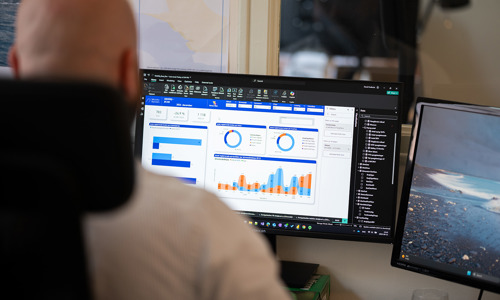
In 2024 Bilvision was commissioned to deliver a new statistics platform to Mobility Sweden, so they could better track the country's new-registration statistics. It involved moving from PDFs and text files put together by hand to interactive Power BI reports.
- What we've delivered is an interactive presentation of the statistics where users themselves can set their own filters and combinations to be able to work more deeply with their analyses. It creates a more specific result than before, and helps them focus on what's important for their particular operation, says David Hedkvist, BI developer at Bilvision.

David Hedkvist, BI developer at Bilvision
Greater flexibility
A concrete example of improved insights and deeper analysis is the ability to see leasing and financing forms for newly registered vehicles, broken down by municipality and fuel segment.
- It can be valuable if they want to see how many cars have been leased in this particular location, or see leasing on a specific fuel segment, David explains.
The challenge: Integrations and customisations at short notice
While the platform was being developed centrally, the majority of member companies continued to request access to their individual file deliveries - in the same format as before. Since the member companies operate in different segments, they also have different requirements for the content of the reporting.
- One member company might work with lorries, another with passenger cars and a third with buses. Their needs differ. Some want to see overall statistics for the whole country, while others need detailed dealer follow-up. For example Ferrari, which belongs to the luxury car segment - for them it's not as relevant how many new Nissan LEAFs have been registered, but they're more interested in being able to compare their own market share in the premium segment, explains Isac Boman, developer at Bilvision.
Recreating earlier deliveries
Several member companies had therefore received individual deliveries from the previous vehicle-data supplier. They had purchased their own customisations of the statistics, either as integrations or specific files.
- We've continued to support that. But it meant many calls and meetings to understand what they'd received before - often there was just an old file with the comment "this is how it looked before, but we don't really know how it was produced", Isac recounts.
A substantial piece of work for Bilvision was therefore to quickly get to grips with imports and systems to recreate the earlier deliveries, in a format that member companies could continue to work with.
- Given the short timeframe, we did what we could. It may not have been perfect, but it was good enough for members to continue receiving the business-critical data they need for their respective operations, Isac concludes.

Isac Boman, developer at Bilvision
In the next part: Security in focus
In part three we describe how Bilvision met the IT-security challenges in the project - finding solutions that were both quick to implement and maintained a high security level.